Underdeck Drainage Systems: Transforming Waste Space into Living Space
Discover how an under deck drainage system turns the unused area beneath your elevated deck into a dry, finished outdoor living space. Expert guidance from a North Atlanta builder with 8+ years of hands-on installation experience.
If you have an elevated deck — and most homes in Alpharetta, Milton, Roswell, and Johns Creek do, thanks to North Georgia's rolling terrain — there's a good chance you're wasting hundreds of square feet of outdoor space directly beneath it. Every time it rains, that area floods. When the sun comes out, it stays muddy. Most homeowners just ignore it.
An under deck drainage system changes that equation entirely. By installing a waterproof trough-and-gutter system between or beneath your deck joists, you create a completely dry ceiling below — turning dead space into a patio, outdoor kitchen, storage area, or screened-in retreat. At Need Construction, we've been installing these systems across the North Atlanta metro for over eight years, and the reaction from homeowners is always the same: "Why didn't we do this sooner?"
This guide walks you through how underdeck waterproofing works, the differences between the leading systems, what it costs, and whether it makes sense for your home. If you're already building a new deck or looking to get more from the one you have, read on.
How Underdeck Waterproofing Works
The concept behind every under deck drainage system is simple: catch the water before it drips through your deck boards, channel it to a gutter, and move it away from the house. The execution, though, requires precision — especially on North Georgia homes where deck heights, joist spacing, and slope can vary dramatically from one property to the next.
The Trough and Gutter System
Every underdeck gutter system works on the same principle: water falls through the gaps in your deck boards, hits a collection surface — either a membrane draped over the joists or rigid panels mounted beneath them — and flows toward a perimeter gutter via gravity. That gutter connects to downspouts that carry the water well away from your foundation, just like your roof's gutter system.
The pitch is critical. We install every trough with a minimum 1/8-inch per foot slope toward the collection gutter to ensure water moves efficiently and doesn't pool. On larger decks — 500 square feet and up — we often run a central gutter in addition to the perimeter system to handle heavy Georgia downpours without overflow.
Protecting Your Foundation and Ledger Board
Water intrusion at the ledger board — where your deck attaches to the house — is one of the leading causes of structural damage on elevated decks. An under deck waterproofing system diverts water before it reaches the ledger, dramatically reducing the risk of rot, mold, and framing damage behind your siding. We flash every ledger connection with corrosion-resistant metal and seal it independently from the drainage system for double protection.
Over-Joist vs. Under-Joist Systems
The two main approaches to under deck waterproofing differ in where the waterproof layer sits relative to your joists:
Trex RainEscape
- Installation: Membrane installs on top of joists before decking is laid
- Best for: New deck construction or full deck rebuilds
- Ceiling finish: Not visible — you add your own ceiling below
- Waterproofing: Nearly 100% — water never contacts the joists
- Cost: $8–$12 per sq ft installed
ZipUp UnderDeck
- Installation: Panels mount beneath existing joists — no deck removal needed
- Best for: Existing decks and retrofit projects
- Ceiling finish: Clean, finished panel ceiling included
- Waterproofing: Excellent — panels channel water to integrated gutters
- Cost: $10–$15 per sq ft installed
Creating the Outdoor Living Room
Once the drainage layer is in place, the underdeck ceiling becomes the foundation for a true outdoor room. The flat, finished surface of a ZipUp system accepts recessed lighting, ceiling fans, and even mounted speakers. With Trex RainEscape, you add a separate ceiling material — tongue-and-groove pine, vinyl beadboard, or composite panels — to create the same finished look. Either way, you end up with a space that feels more like a covered patio than the underside of a deck. Homeowners in neighborhoods like Windward, Crabapple, and Brookfield regularly use these spaces for outdoor dining, hot tub enclosures, and screened-in relaxation areas.
Maximizing Your Home's Footprint with Dry-Below Systems
Here's the math that gets homeowners excited: if you have a 400 square foot second-story deck, you already own 400 square feet of covered outdoor space below it. An under deck drainage system makes that space usable — no zoning variance, no new roofline, no additional foundation. You're doubling your outdoor footprint with a fraction of the cost and permitting hassle of a new addition.
Ideal Applications for Dry-Below Space
The most popular uses we see across North Atlanta projects:
Outdoor Kitchens
A dry ceiling protects your grill, countertops, and cabinetry from rain damage. Run gas, electric, and water lines through the ceiling cavity for a fully plumbed cooking area.
Hot Tub Retreats
The covered space keeps debris out of the water and provides privacy. The deck above acts as a natural shade canopy, and the drainage system prevents splash-back from puddling overhead.
Screened-In Lower Levels
Add screen panels around the perimeter of the dry-below space for a bug-free zone. Popular in Roswell and Marietta where mosquitoes are a serious consideration from April through October.
Storage & Workshop Areas
A dry, covered area is ideal for storing patio furniture, tools, and seasonal items without building a separate shed. Many homeowners enclose a section for a workshop or potting station.
Integrating Electrical and Entertainment
One of the biggest advantages of an underdeck ceiling system is the wiring cavity it creates. We route low-voltage LED lighting, ceiling fan power, and speaker wiring through the space between the panels and joists — keeping everything hidden and weatherproofed. Recessed can lights and flush-mount fans install directly into ZipUp panels. For RainEscape systems with a separate ceiling, we build out a framework that holds fixtures securely while maintaining the waterproof barrier above.
Clients in Alpharetta and Johns Creek regularly ask us to install outdoor televisions, soundbars, and smart lighting that integrates with their home's existing automation system. The dry, covered space makes this possible without the weather exposure concerns you'd face on an open patio.
Georgia Pine Needle Maintenance
Let's talk about the number-one maintenance concern in North Georgia: pine needles. Loblolly and shortleaf pines drop needles year-round, and they accumulate in gutters fast. We install oversized gutter outlets and recommend leaf guards on every downspout to prevent clogs. For the gutter troughs themselves, a twice-yearly flush — once in late fall and again in early spring — keeps everything flowing. ZipUp's removable panels make gutter access easy, while RainEscape systems have designated cleanout points. Budget about 30 minutes per cleaning for a standard-sized system.
Trex RainEscape vs ZipUp: Side-by-Side
Choosing the right under deck waterproofing system depends on whether you're building new or upgrading an existing deck.
| Feature | Trex RainEscape | ZipUp UnderDeck |
|---|---|---|
| Installation Timing | During new build only | New build or retrofit |
| Placement | Over joists (membrane) | Under joists (panels) |
| Finished Ceiling | Separate ceiling required | Built-in panel ceiling |
| Cost (Installed) | $8–$12 / sq ft | $10–$15 / sq ft |
| Color Options | Not visible (hidden) | White, Almond, Driftwood |
| Maintenance Access | Cleanout ports | Removable panels |
Our recommendation: If you're building a new deck or doing a complete rebuild, Trex RainEscape gives you the most watertight seal and leaves your ceiling options wide open. If you have an existing deck and want a finished look without tearing up the decking, ZipUp UnderDeck is the clear choice. We install both systems and can walk you through the trade-offs during a free on-site consultation.
Ready to Create Dry Space Under Your Deck?
Get a free on-site consultation with detailed measurements, system recommendations, and a line-by-line estimate — no obligation.
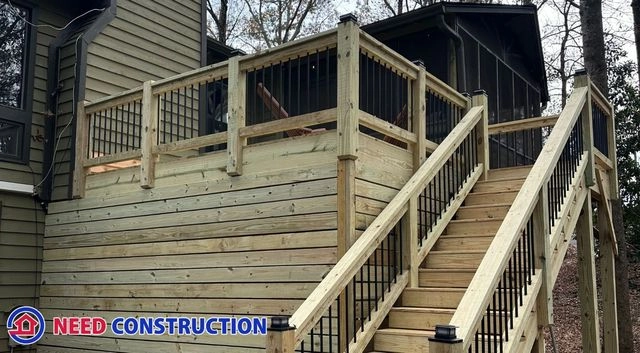
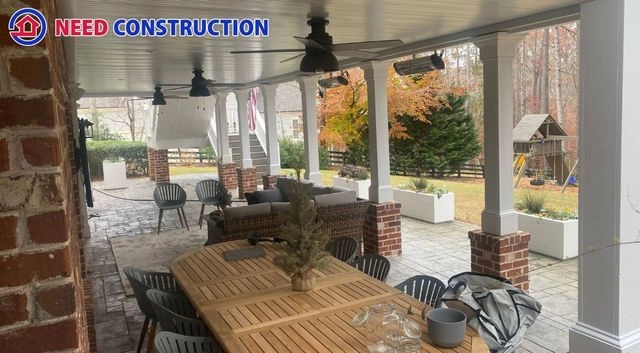
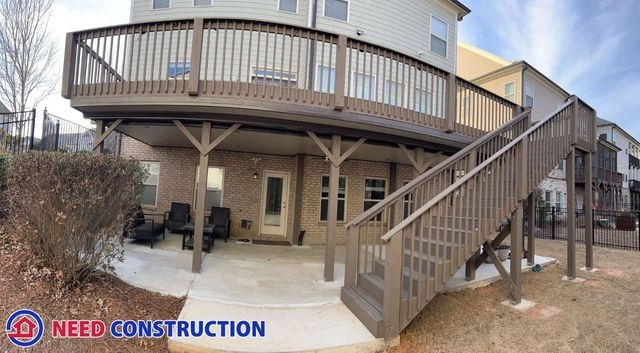
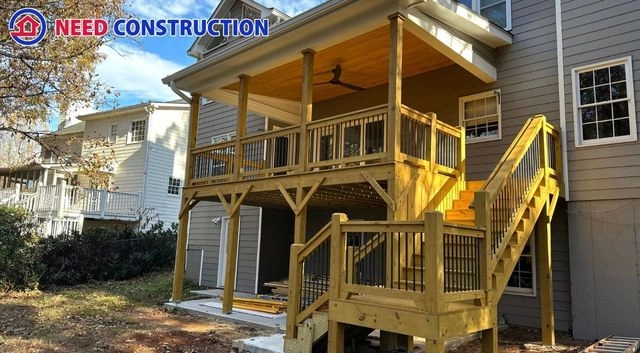
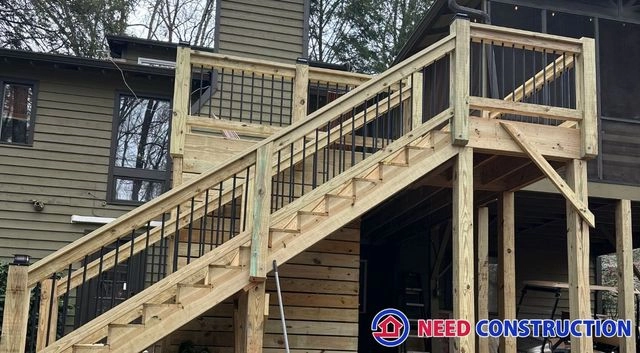
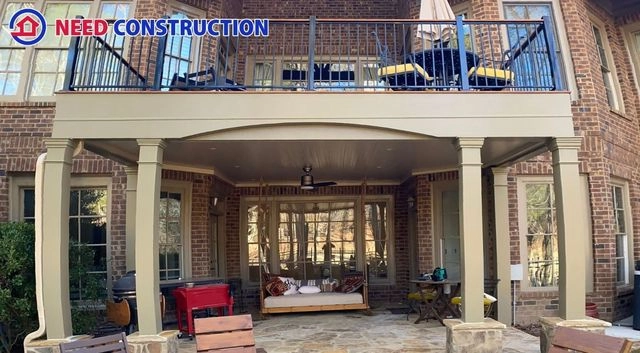
Underdeck Drainage Projects We've Completed
Dry-below installations across Alpharetta, Milton, Roswell, and the greater North Atlanta area.
Underdeck Drainage: Frequently Asked Questions
Answers from a North Atlanta builder who installs these systems year-round across Alpharetta, Milton, Roswell, and surrounding communities.
How does an underdeck drainage system work?
An under deck drainage system uses a network of troughs or panels installed between or beneath your deck joists to collect rainwater as it falls through the decking gaps. The water flows along pitched channels into an integrated gutter that runs along the perimeter, then drains through downspouts away from your home's foundation. The result is a completely dry space below your elevated deck — ready for furniture, entertaining, or storage. We've installed these systems on hundreds of decks across Alpharetta, Roswell, and Milton, turning unused areas into functional outdoor living rooms.
Can you install underdeck drainage on an existing deck?
Yes — and it's one of the most common requests we handle. Under-joist systems like ZipUp UnderDeck are designed specifically for retrofit installations. We attach the panels and gutters beneath your existing joists without disturbing the deck surface above. Before starting, we perform a structural assessment to verify your framing is sound and that joist spacing supports the system. Most retrofit installations on a standard 300–500 sq ft deck take 2–3 days to complete.
Trex RainEscape vs ZipUp: What's the difference?
Trex RainEscape is an over-joist system installed during deck construction — the membrane sits on top of the joists before the decking goes down. It's the most watertight option but must be planned before decking is installed. ZipUp UnderDeck mounts beneath existing joists, making it the go-to choice for retrofit projects. Visually, ZipUp provides a clean, finished panel ceiling, while RainEscape is hidden above. Cost-wise, both land in the $8–$15 per square foot range installed, with ZipUp running slightly higher due to the finished panel aesthetic.
Will an underdeck system cause my deck to rot?
No — a properly installed system actually protects your joists from rot by directing water away from the wood rather than letting it pool on surfaces. The key is ventilation. Every system we install includes adequate airflow gaps between panels and joists so moisture can evaporate rather than get trapped. Georgia's humidity makes this especially important. We design every installation with proper cross-ventilation to keep your framing dry and structurally sound for decades.
How do you clean an underdeck drainage system?
Maintenance is straightforward. ZipUp systems feature removable panels — you can pop out individual sections to access the gutters for cleaning. For Trex RainEscape, you flush the trough system with a garden hose once or twice a year. The biggest maintenance task in North Georgia is clearing pine needles and leaf debris from the gutter outlets each fall and spring. We recommend installing leaf guards on downspouts to reduce the frequency of cleaning.
Does it provide a finished ceiling look?
Absolutely. ZipUp UnderDeck panels create a smooth, attractive ceiling in colors like white, almond, and driftwood that look like a finished porch ceiling. You can integrate recessed lighting, ceiling fans, and even Bluetooth speakers directly into the panel system. Many of our clients in Johns Creek and Milton treat the dry-below space as a true outdoor room — complete with a TV, seating area, and ambient lighting built right into the underdeck ceiling.
What is the cost of underdeck waterproofing?
Under deck waterproofing typically costs $8–$15 per square foot installed, depending on the system and complexity. For a 400 sq ft area beneath a standard two-story deck, that's roughly $3,200–$6,000 for materials and labor combined. Compare that to building a new addition or screened porch — which can run $30,000–$80,000 — and underdeck drainage is one of the highest-value improvements you can make. We provide detailed estimates that break down material and labor costs line by line.
Is underdeck drainage worth it in Georgia?
Georgia averages nearly 50 inches of rain per year, and the North Atlanta area sees frequent afternoon thunderstorms from April through September. Without an under deck drainage system, that space beneath your elevated deck sits empty and unusable for most of the year. With one installed, you gain a dry, shaded retreat that extends your living area by hundreds of square feet. Homeowners in Roswell, Alpharetta, and Marietta consistently tell us it's one of the best investments they've made in their home.
Still have questions?
We're here to help you find the answers.
What North Atlanta Homeowners Say
Real feedback from clients who trusted Need Construction with their deck and outdoor living projects.
"It's tough to find people you feel like you can trust not to try and get over on you. I spoke with Wes about work I needed to get done and was surprised at his level of honesty and professionalism. Putting that with the word of mouth on the quality of his work... and I wouldn't/won't hesitate to work with him on my next project."
MARSHALL NORTHINGTON
2026-03-02
"Wes is awesome! He helped rectify work done by a previous contractor and we would definitely recommend to anyone in the area!"
Austin Campbell
2026-02-01
"Great service ! Outstanding staff and was on time and efficient work was all around beautiful I have referred this company for many other jobs and plan to use them for many more projects"
Brianna Moore
2026-01-17
"We had a major project to be undertaken. Need construction to the rescue!! We had water damage to some of the framing on the home exterior and major deck demo and rebuild. They handled it all. I had some unique requests that I wanted installed on my deck. The DekDrain rain system along with the full composite Dekorators Summit boards and railing with a cocktail rail was our desire. We also had to have a concrete patio area below. Wes and his team made it all happen. The subframe was built with better materials that any other contractor had even offered and I was impressed with that alone. I have no doubt that hurricane force winds would have no effect on this fortress of a deck. Even the city inpectors were wowed by the build quality. The craftsmanship and finishing of the final product is top tier. They will take the time to make sure it's your dream come true."
Rodney Anderson
2026-01-16
"It was great working with Wes and the team at Need Construction. Wes was always in constant communication managing the project and made sure we were happy with the work during every part of the process. Very happy with the quality and workmanship of our new patio, couldn’t ask for much more!"
Lourdes Xavier Alfred Raj
2025-12-04
"Wes and his crew did a great job at a reasonable price rebuilding my shed roof after a tree feel onto it"
Paul Shaffer
2025-12-04
Related Guides for Homeowners
More practical resources on decks, exteriors, and construction decisions for North Atlanta homes.
Deck Construction Cost Guide
Real pricing data, material comparisons, and honest budget breakdowns for building a deck in the North Atlanta area.
Read the guide →GAF vs CertainTeed Shingles
A head-to-head comparison of the two leading shingle brands — warranties, performance, and value for Georgia homes.
Read the guide →Modernizing 1970s Ranch Exteriors
Practical renovation strategies to update the curb appeal and durability of ranch-style homes throughout North Atlanta.
Read the guide →Let's Transform the Space Under Your Deck
From initial measurements to finished installation — we handle every step of your underdeck drainage project.