Hardie Board vs. Vinyl Siding: The Ultimate Comparison for Atlanta Homes
An honest, side-by-side look at James Hardie fiber cement and vinyl siding — from a North Atlanta contractor who installs both. Real pricing, real performance data, and straightforward advice for your home.
If you're replacing the siding on your Atlanta-area home, you've likely narrowed it down to two options: James Hardie fiber cement or vinyl siding. Both are solid choices — they're the two most popular cladding materials in the Southeast — but they perform very differently once they're on your house.
At Need Construction, we've installed both materials on hundreds of homes across Alpharetta, Milton, Roswell, Johns Creek, and the surrounding North Georgia communities. We don't push one product over the other — we help homeowners understand the trade-offs so they can make the decision that fits their budget, their aesthetic goals, and their long-term plans for the property.
This guide breaks down the hardie board vs vinyl siding debate using real project data from our own installations. No manufacturer talking points, no fluff — just the numbers and the field experience we've built over eight-plus years in this market.
Hardie Plank vs. Vinyl: Durability and Fire Resistance
When homeowners ask us about the james hardie siding vs vinyl debate, durability is usually the first topic on the table. Here's how these two materials hold up in the real conditions we see across North Georgia.
Fiber Cement Performance
- Non-combustible — Class A fire rating, won't ignite or contribute to flame spread
- Impact resistant — Rigid composition withstands hail and debris without cracking
- Pest proof — Termites, carpenter bees, and woodpeckers cannot damage fiber cement
- Dimensionally stable — No warping, buckling, or sagging in Georgia heat
Vinyl Performance
- Melts near flame — Vinyl softens at 160°F and melts at higher temperatures
- Cracks in cold/hail — Brittle in winter, prone to cracking from hailstones
- Pest resistant — Insects won't eat vinyl, but can nest behind loose panels
- Warps in heat — Dark-colored vinyl panels are especially prone to buckling
Fire Safety in Wooded Georgia Suburbs
If you live in a wooded neighborhood in Alpharetta, Milton, or Cumming, fire resistance isn't a theoretical advantage — it's a practical one. During drought years, brush fires and controlled burns are a reality in North Georgia. James Hardie siding carries a Class A fire rating, the highest available, meaning it won't ignite, support combustion, or contribute to flame spread. Vinyl, on the other hand, melts and deforms at relatively low temperatures and can release toxic fumes when it burns.
Insurance providers in the metro Atlanta area have started recognizing this distinction. Some homeowners with fiber cement siding report modest reductions in their annual premiums — a benefit that adds up over the life of the product.
Impact Resistance: Hail and Storm Debris
North Georgia gets its share of severe thunderstorms, particularly from March through September. We've seen vinyl siding crack and shatter from hail as small as one inch in diameter — especially on panels that have been on the house for 10+ years and have become brittle from UV exposure. Hardie plank siding, by contrast, is a rigid, cement-based product that absorbs impact without fracturing. After the storms that came through Roswell and Johns Creek in recent years, we replaced far more vinyl panels than Hardie.
Pest Resistance: Woodpeckers, Termites, and Carpenter Bees
Georgia woodpeckers are aggressive — especially in the spring mating season — and they will drill into wood and even some insulated vinyl siding systems looking for insects or creating nesting cavities. Fiber cement is simply too hard for them to penetrate. The same goes for termites and carpenter bees, which can damage wood siding and the sheathing behind vinyl panels. When we compare hardie plank siding to vinyl from a pest standpoint, fiber cement is the only material that offers true, permanent pest resistance without chemical treatments.
Maintenance and Cost Comparison: Fiber Cement vs. Vinyl
The upfront cost difference between vinyl and Hardie board is significant. But as with most building materials, the purchase price is only part of the story. Here's how the fiber cement vs vinyl siding cost breaks down over the long term.
| Factor | Vinyl Siding | James Hardie |
|---|---|---|
| Material + Install / Sq Ft | $5 – $10 | $12 – $20 |
| Typical 2,000 Sq Ft Home | $10,000 – $18,000 | $18,000 – $35,000 |
| Annual Maintenance | $200 – $400/yr (washing) | ~$0/yr (between paint cycles) |
| Repaint / Refresh Cycle | Not paintable (replace to change color) | Every 15 years |
| Expected Lifespan | 15 – 25 years | 30 – 50 years |
| Warranty | Limited lifetime (prorated) | 30-year non-prorated + 15-year finish |
The Long-Term Math
Take a 2,000 sq ft home in Alpharetta. Vinyl siding installed at $14,000 will need replacement in 20–25 years — that's a second siding project at today's pricing. Hardie installed at $26,000 on the same house will still be in solid condition 30 years from now, needing only a repaint at the 15-year mark (around $3,000–$5,000 for a full exterior repaint). Over a 30-year span, the Hardie homeowner spends roughly the same as the vinyl homeowner — but with a far better-looking, better-performing home throughout.
The maintenance differences between Hardie and vinyl matter most in Georgia's humid subtropical climate. Vinyl siding needs regular pressure washing to prevent mold and algae growth — a recurring cost of $200–$400 per year if you hire it out. Hardie's ColorPlus finish resists algae staining and requires nothing beyond an occasional rinse for the first 15 years.
Resale Value in North Atlanta
If you're planning to sell within the next 5–10 years, the material choice matters even more. In premium markets like Alpharetta, Milton, and Johns Creek, hardie plank siding is the expected standard on higher-end homes. Real estate agents consistently tell us that fiber cement siding is a selling point that appears on listings and drives buyer interest. James Hardie's own data shows that fiber cement siding recovers 75–85% of its installed cost at resale — one of the highest returns for any exterior renovation. Vinyl, in these same neighborhoods, can actually be a detractor if competing homes have fiber cement.
When to Choose Hardie vs. When Vinyl Makes Sense
Every home and budget is different. Here's our honest take on which material fits which situation in the North Atlanta market.
Choose James Hardie If...
- You plan to stay long-term — The higher upfront cost pays off over 15+ years of ownership through lower maintenance and longer lifespan.
- Curb appeal matters — Hardie's depth, texture, and shadow lines give it an authentic wood look that vinyl can't match at close range.
- You're in a premium neighborhood — Homes in Alpharetta, Milton, and Johns Creek buyers expect fiber cement on move-in-ready listings.
- Fire and storm protection are priorities — Non-combustible, impact-resistant, and dimensionally stable in all weather.
Vinyl May Be Right If...
- Budget is the primary concern — At $5–$10/sq ft installed, vinyl costs roughly half of what Hardie does and still delivers a clean finished look.
- You're preparing to sell soon — If you're listing within 2–3 years and need a facelift, vinyl gives you a fresh exterior at lower cost.
- Rental property or investment — For properties where durability over 30+ years isn't the goal, vinyl offers a solid return at a lower price point.
- Light colors only — Vinyl performs best in lighter shades that don't absorb as much heat, reducing the risk of warping.
Why North Atlanta Homeowners Choose Need Construction
Licensed, insured, and experienced with both vinyl and fiber cement siding systems.
Ready to Compare Siding Options for Your Home?
Get a detailed, side-by-side estimate for vinyl and Hardie board siding — customized to your home's square footage, style, and budget.
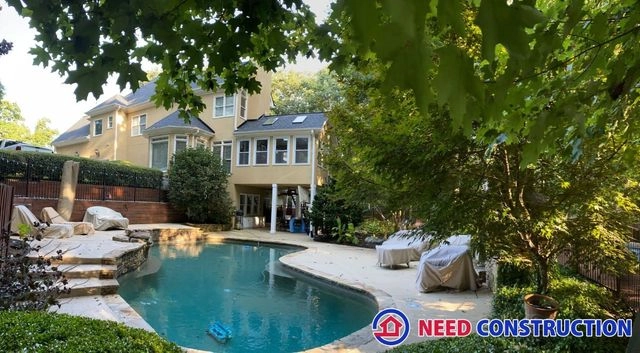
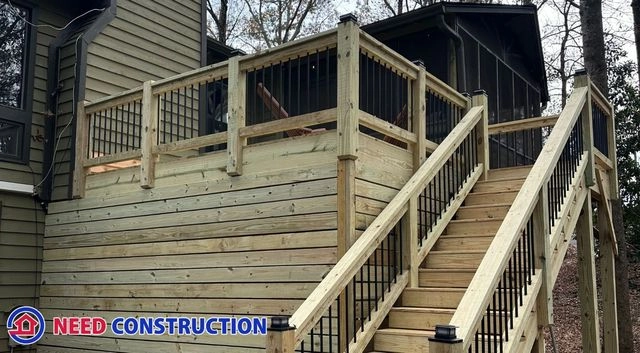
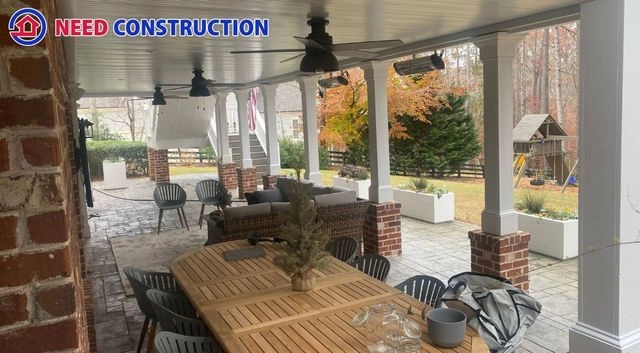
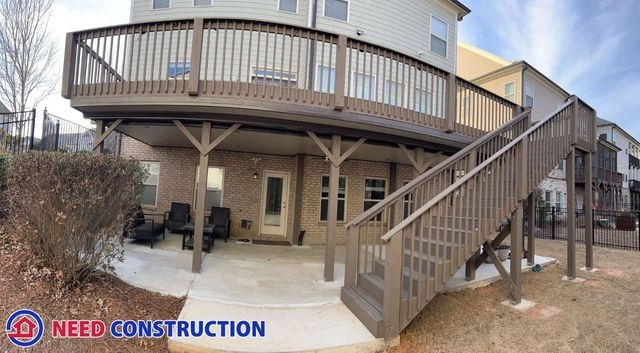
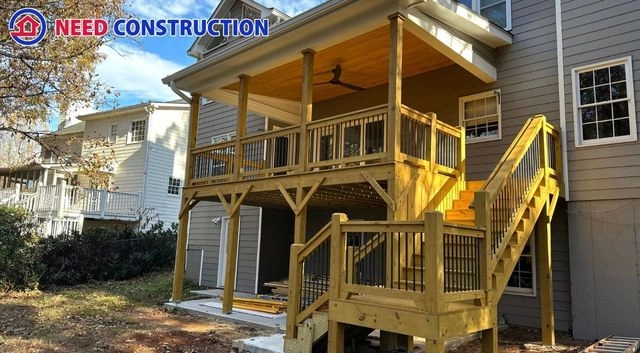
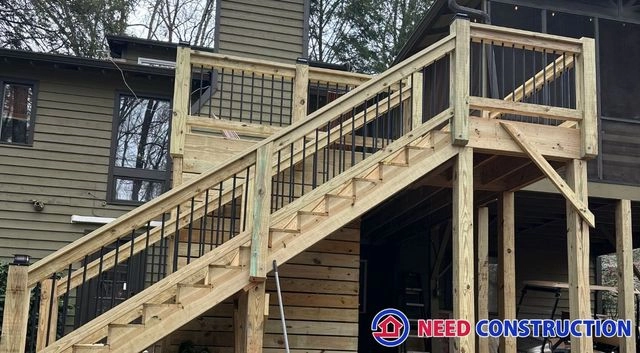
Our Recent Siding Projects
Vinyl and fiber cement installations across Alpharetta, Milton, Roswell, and North Atlanta — see the quality difference for yourself.
Frequently Asked Questions About Hardie Board vs. Vinyl
Answers from a North Atlanta siding contractor who installs both materials every week.
Is Hardie board worth the extra cost?
For most North Atlanta homeowners, yes. James Hardie fiber cement siding typically costs 40–60% more than vinyl upfront, but it lasts 30–50 years compared to vinyl's 15–25 year lifespan. Homes in Alpharetta, Milton, and Roswell with Hardie siding consistently appraise higher and sell faster — buyers in these markets expect premium materials. When you factor in the reduced maintenance, superior curb appeal, and the 30-year limited product warranty, the long-term cost of ownership often favors Hardie plank siding over vinyl.
What are the maintenance differences between Hardie and Vinyl?
Hardie board with James Hardie's ColorPlus factory-applied finish holds its color for about 15 years before it needs repainting — and repainting fiber cement is straightforward because paint bonds to it beautifully. Vinyl siding needs annual pressure washing to prevent mold and mildew buildup, which is especially common in Georgia's humid climate. Vinyl can also warp, crack, or buckle in extreme heat, while Hardie holds its shape regardless of temperature. Neither material needs staining or sealing, but fiber cement gives you far more control over your home's appearance over time.
How long does James Hardie siding last?
James Hardie fiber cement siding has a real-world lifespan of 30–50 years when properly installed and maintained. The product comes with a 30-year limited transferable warranty covering manufacturing defects, and the ColorPlus finish carries a separate 15-year warranty against peeling, cracking, and fading. Because fiber cement is resistant to rot, termites, and woodpecker damage — all common issues in North Georgia — it holds up significantly longer than wood or vinyl alternatives in our climate.
Can you paint vinyl siding?
Technically yes, but it comes with significant caveats. Paint doesn't bond to vinyl the same way it bonds to wood or fiber cement, so adhesion failure is common within a few years. Darker paint colors absorb more heat than vinyl is designed to handle, which can cause warping and buckling — a real concern during Georgia summers that regularly hit the mid-90s. If you want the ability to change your home's color down the road, Hardie board is the better choice. It's designed to accept paint and can be repainted any color without risk of material damage.
Does Hardie board fade in the Georgia sun?
All exterior materials experience some degree of UV exposure, but Hardie board resists fading far better than vinyl. James Hardie's ColorPlus Technology applies multiple coats of paint in a factory-controlled environment, producing a finish that's up to three times thicker than field-applied paint. This process is backed by a 15-year finish warranty against peeling, cracking, and chipping. In our experience installing Hardie across Alpharetta, Roswell, and Milton, ColorPlus homes maintain vibrant color for well over a decade with no touch-ups needed.
How much does it cost to replace siding on a 2,000 sq ft house?
For a typical 2,000 square foot home in the North Atlanta area, vinyl siding replacement runs $10,000–$18,000 fully installed, including tear-off of the existing material. James Hardie fiber cement siding on the same home costs $18,000–$35,000, depending on the profile style (lap, board and batten, or shingle) and trim details. Both estimates include labor, materials, house wrap, and disposal. We provide itemized quotes so you can see exactly how each line item affects the total — no hidden costs.
Is Hardie board waterproof?
Hardie board is highly moisture-resistant but not waterproof on its own. Fiber cement won't rot, swell, or delaminate when exposed to water — a major advantage over wood siding in Georgia's rainy climate. However, proper installation is critical: the siding needs to work as part of a complete water management system that includes a quality house wrap, proper flashing around windows and doors, and correct overlap at horizontal joints. When installed correctly, Hardie siding prevents moisture from reaching the wall sheathing and keeps your home dry for decades.
Which siding is best for resale value in Milton?
James Hardie fiber cement siding is the clear winner for resale value in Milton and the surrounding North Atlanta market. Homes in communities like Crabapple, Birmingham Crossroads, and the Milton school district sell at a premium, and buyers at this price point expect fiber cement over vinyl. Real estate agents in the area consistently report that Hardie siding is a selling point on listings. A siding replacement comparison from a cost-vs-return standpoint shows fiber cement recovering 75–85% of its cost at resale — one of the highest returns of any exterior upgrade.
Still have questions?
We're here to help you find the answers.
What Homeowners Say About Our Siding Work
Real feedback from North Atlanta homeowners who trusted Need Construction with their siding replacement.
"It's tough to find people you feel like you can trust not to try and get over on you. I spoke with Wes about work I needed to get done and was surprised at his level of honesty and professionalism. Putting that with the word of mouth on the quality of his work... and I wouldn't/won't hesitate to work with him on my next project."
MARSHALL NORTHINGTON
2026-03-02
"Wes is awesome! He helped rectify work done by a previous contractor and we would definitely recommend to anyone in the area!"
Austin Campbell
2026-02-01
"Great service ! Outstanding staff and was on time and efficient work was all around beautiful I have referred this company for many other jobs and plan to use them for many more projects"
Brianna Moore
2026-01-17
"We had a major project to be undertaken. Need construction to the rescue!! We had water damage to some of the framing on the home exterior and major deck demo and rebuild. They handled it all. I had some unique requests that I wanted installed on my deck. The DekDrain rain system along with the full composite Dekorators Summit boards and railing with a cocktail rail was our desire. We also had to have a concrete patio area below. Wes and his team made it all happen. The subframe was built with better materials that any other contractor had even offered and I was impressed with that alone. I have no doubt that hurricane force winds would have no effect on this fortress of a deck. Even the city inpectors were wowed by the build quality. The craftsmanship and finishing of the final product is top tier. They will take the time to make sure it's your dream come true."
Rodney Anderson
2026-01-16
"It was great working with Wes and the team at Need Construction. Wes was always in constant communication managing the project and made sure we were happy with the work during every part of the process. Very happy with the quality and workmanship of our new patio, couldn’t ask for much more!"
Lourdes Xavier Alfred Raj
2025-12-04
"Wes and his crew did a great job at a reasonable price rebuilding my shed roof after a tree feel onto it"
Paul Shaffer
2025-12-04
Related Home Exterior Guides
More resources to help you make smart decisions about your home's exterior.
Deck Construction Cost Guide
Real pricing data, material comparisons, and budget breakdowns for deck projects in North Atlanta.
Read the guide →GAF vs. Certainteed Shingles
Expert analysis of the top two shingle brands — durability, wind resistance, and warranties for Georgia roofs.
Read the guide →Underdeck Drainage Benefits
How underdeck drainage systems turn wasted space into usable outdoor living area beneath elevated decks.
Read the guide →Serving Alpharetta, Milton, Roswell & Surrounding Communities
Conveniently located for North Atlanta customers
Hours
Monday - Friday: 9am - 6pm
Saturday: 9am - 5pm
Sunday: Closed
Let's Find the Right Siding for Your Home
Whether you're leaning toward Hardie board or vinyl — or you're still undecided — we'll give you an honest recommendation based on your home, your goals, and your budget.