The Ultimate Home Addition Planning Checklist for Georgia Homeowners
Everything you need to know before breaking ground — from feasibility and permits to contractor selection and construction. Built from 8+ years of building additions across North Atlanta.
Why You Need a Checklist Before Building a Home Addition
A home addition is one of the biggest investments you'll make in your property — and one of the easiest to get wrong without proper planning. We've seen homeowners in Alpharetta break ground before confirming their HOA allows the addition. We've watched families in Roswell blow their budget because nobody mentioned the electrical panel upgrade their 1990s home needed. And we've helped more than a few Johns Creek homeowners recover from contractors who started work without pulling permits.
After 8 years and over 500 projects across North Atlanta, we built this home addition planning checklist to give you the same roadmap we use internally at Need Construction. Whether you're considering a bump-out, a full room addition, or a second-story extension, this guide walks you through every phase — from the first "should we add on?" conversation to the final inspection sign-off.
This isn't generic advice pulled from a national website. Every tip, every cost range, and every timeline reference is specific to building in Georgia — particularly in Fulton, Cobb, Cherokee, and Forsyth counties where we do the majority of our work.
Feasibility and Preliminary Design
Before you sketch a single floor plan, you need to answer some fundamental questions about your property, your goals, and your budget. Skipping this phase is the #1 reason home addition projects go sideways.
Determine Your "Why"
Are you adding space because your family is growing, or are you investing for resale value? The answer changes everything — from which rooms to add, to how much you should spend. A growing family in Milton might prioritize a ground-floor master suite, while a homeowner in Peachtree City planning to sell in 3 years should focus on kitchen or bathroom additions that appraisers value most. Know your ROI expectations before you start drawing plans.
Check Setbacks & HOA Rules
Every lot in North Atlanta has setback requirements — minimum distances your structure must sit from property lines. In Alpharetta, residential side setbacks are typically 7.5 feet, but this varies by zoning district. Many subdivisions in Johns Creek and Milton have additional HOA architectural review requirements that can add 4–6 weeks to your timeline. Pull your plat survey and check both county zoning and HOA covenants before you invest in design work.
Budget for Hidden Costs
The addition itself is only part of the expense. Most homes built before 2005 in the Roswell and Marietta area need an electrical panel upgrade (often from 100 to 200 amps) to support the additional load — that's $2,000–$4,000 alone. HVAC modifications or a new zone system can add $5,000–$12,000. Factor in temporary living adjustments, landscaping restoration, and a 15–20% contingency fund. We give our clients a full cost breakdown before any work begins.
Choose Your Addition Type
Your three main options are a bump-out (extending an existing room 4–8 feet), a full room addition (new footprint on your lot), or a second-story extension. Bump-outs are the most affordable starting around $15,000–$30,000, but they're limited in scope. Full room additions offer the most flexibility and run $100–$250 per square foot in the Atlanta metro. Second-story additions are the most complex — requiring structural engineering to verify your existing walls and foundation can carry the new load — but they're ideal when your lot doesn't allow outward expansion.
Need Construction by the Numbers
Trusted by homeowners across North Atlanta for additions, renovations, and exterior remodeling.
Technical Requirements & Engineering
This is where most DIY planners get lost — and where hiring the right contractor pays for itself. The technical phase determines whether your addition is structurally sound, code-compliant, and built to last decades.
Soil Testing & Foundation Assessment
Georgia's red clay soil presents unique challenges for foundations. Before pouring concrete, a geotechnical report tells you about soil bearing capacity, water table depth, and drainage patterns. This is especially critical in areas like Canton and Cumming where terrain varies significantly lot-to-lot. A proper soil test costs $800–$1,500 and can save you $20,000+ in foundation repairs down the road. For second-story additions, we also assess whether your existing foundation can handle the additional load.
Structural Engineering
Any addition that ties into your existing structure needs a structural engineer's review. They'll evaluate whether your current walls, headers, and foundation can support new loads — and design reinforcements where needed. For second-story additions on homes in older Roswell and Marietta neighborhoods, this often means sistering floor joists and adding support beams. A licensed PE's stamp is required for permits in every North Atlanta jurisdiction we work in. Budget $2,000–$5,000 for engineering depending on complexity.
Roof Tie-In Strategy
The roof connection is where additions either look like they belong or stick out like a mistake. We use GAF roofing systems with proper step flashing, ice-and-water shield at tie-in points, and matched shingle profiles so the new section blends seamlessly with your existing roof. Getting the roof pitch, ridge height, and drainage right takes experience — a poorly tied roof is the leading cause of leaks in home additions. Ask your contractor specifically how they handle the transition zone.
Permit Navigation
Permit requirements vary significantly by jurisdiction in the Atlanta metro. Fulton County requires stamped engineered plans for any structural modification. Cobb County's process is slightly faster but has strict stormwater management requirements for additions that increase impervious surface area. Alpharetta and Roswell have their own city permits on top of county requirements. We handle the entire permit process for our clients — from application through final inspection — because knowing which inspector wants what saves weeks of back-and-forth.
Ready to See If Your Home Addition Is Feasible?
We'll walk your property, review your goals, and give you a realistic scope and budget — no obligation.
Contractor Selection & Project Management
Choosing the right contractor is the single biggest factor in whether your home addition project succeeds. Here's what to look for — and what to watch out for — when hiring in the North Atlanta market.
Verify Licensing & Insurance
Georgia requires a General Contractor license for projects over $2,500 — verify it at the Secretary of State's website. Confirm they carry general liability insurance (minimum $1M), workers' compensation coverage, and a surety bond. Ask for certificates of insurance, not just verbal confirmation. An uninsured contractor working on your property means you're personally liable if a worker is injured. Every home addition contractor tip we can offer comes back to this: verify everything in writing.
Evaluate Local Track Record
Ask for references from projects in your specific area — a contractor who's built additions in your neighborhood understands the local soil conditions, permit processes, and HOA dynamics. Check Google reviews, BBB ratings, and ask to see completed projects in person. At Need Construction, we invite prospective clients to drive by our past projects in Alpharetta, Milton, and Roswell because nothing beats seeing the work firsthand. A quality contractor should have no hesitation about showing you their recent work.
Understand the Contract
Your contract should include a detailed scope of work, a fixed price (not an estimate), a payment schedule tied to milestones (never more than 10% upfront), a start and completion date with delay provisions, and a clear change-order process. Be wary of contractors who want more than a third of the total upfront or who resist putting details in writing. Georgia's home improvement laws protect you — make sure your contract reflects that protection.
Communication & Project Management
Before signing, ask how your contractor communicates. Will you get weekly progress updates? Who's your point of contact — the owner, a project manager, or whoever happens to be on site? How do they handle unexpected issues that arise during construction? The best home addition contractors in North Atlanta run organized job sites with clear communication protocols. If a contractor can't explain their project management process during the sales phase, imagine how they'll handle your project when things get complicated.
Construction & Quality Assurance
Once permits are in hand and your contractor is hired, construction begins. Here's what to expect during the build — and what to watch for to protect your investment.
Foundation & Framing
The first visible progress is the foundation pour and framing. For slab-on-grade additions (most common in North Atlanta), expect 1–2 weeks for excavation, forming, and concrete curing. Framing takes another 1–2 weeks for a typical room addition. This is when your addition starts to take shape — and when the county inspector makes their first visit to verify structural compliance. Insist on being present for the framing inspection so you can see exactly what's being built before it gets covered with drywall.
Mechanical Rough-Ins
After framing passes inspection, electricians, plumbers, and HVAC technicians install their systems inside the walls and ceiling. This is the last chance to make changes to outlet placement, plumbing locations, or vent runs without major cost. Walk through with your contractor during this phase and verify everything matches the plan — moving a shower drain after drywall is installed costs 5x what it costs to move it now.
Exterior Finishing & Weatherproofing
Siding, roofing, and window installation happen in parallel with interior rough-ins. Matching your existing exterior materials is critical — especially for brick or stone homes common in Alpharetta and Johns Creek. We source matching materials before the project starts to avoid delays. The weatherproofing and drainage at the connection point between old and new construction is where most additions fail over time, so pay close attention to flashing details and sealant work.
Final Inspections & Punch List
After drywall, paint, flooring, and trim are complete, you'll do a final walkthrough to create a punch list — a written list of every item that needs correction or completion. Don't sign off on the project until every punch list item is addressed. The county will also perform a final inspection covering structural, electrical, plumbing, and mechanical systems. Only after passing this inspection is your addition officially legal and permitted — which matters enormously for insurance coverage and resale.
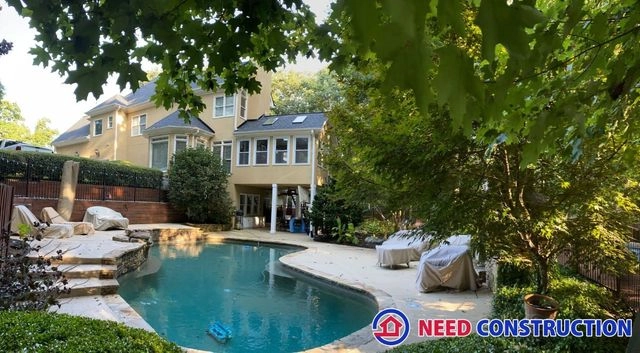
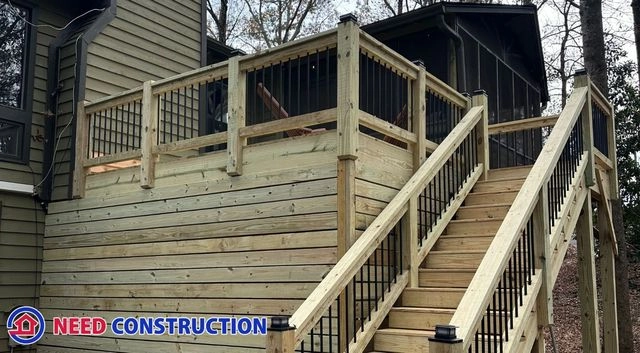
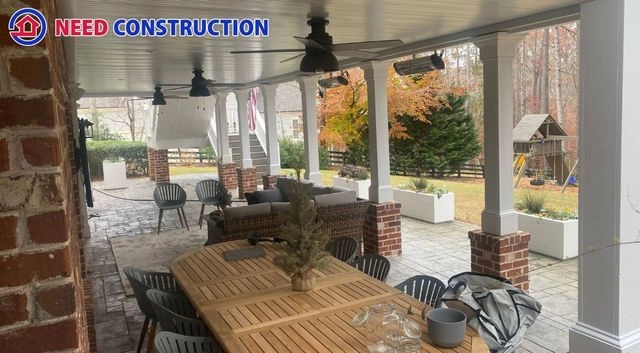
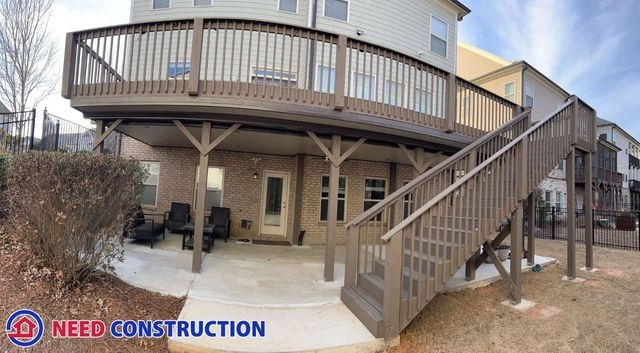
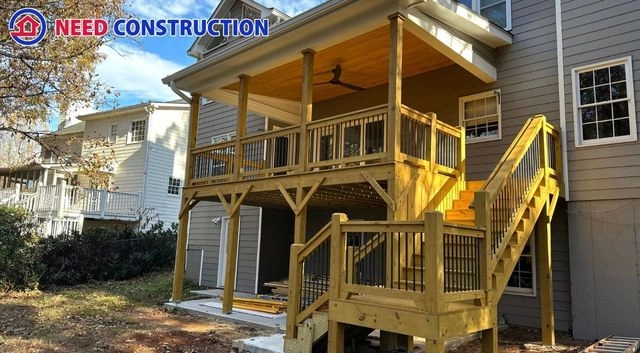
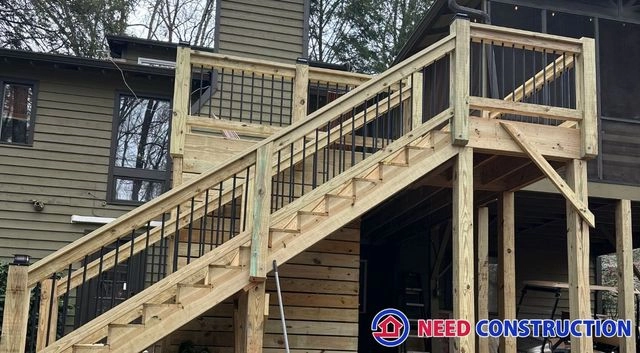
Home Addition & Renovation Projects
See the quality of our craftsmanship across North Atlanta — from room additions and second-story builds to full renovations.
Continue Your Research
Planning a home addition often involves related projects. These guides cover topics our clients frequently ask about during the planning phase.
Deck Construction Cost Guide
Adding a deck alongside your addition? Understand the real costs of building a deck in the Atlanta area — materials, labor, and permitting.
Read the Guide →GAF vs. CertainTeed Shingles
Your addition's roof needs to match and perform. Compare the two leading shingle brands we install across North Atlanta projects.
Compare Shingles →Underdeck Drainage Benefits
If your addition includes a raised deck or second-story extension, proper drainage underneath is critical. Learn how underdeck systems protect your investment.
Learn More →Common Home Addition Questions
Answers from our team based on 8+ years of building additions in the Atlanta metro.
Where do I start with a home addition?
Start by clearly identifying what you need — whether it's an extra bedroom, expanded kitchen, or home office. Set a realistic budget that includes a 15–20% contingency for surprises like outdated wiring or foundation issues. Then consult with an experienced local contractor who knows North Atlanta building codes and can walk your property to assess feasibility before you invest in architectural drawings.
Do I need an architect for a home addition in Georgia?
Georgia doesn't require a licensed architect for residential additions under certain square footage thresholds, but structural complexity often makes one worthwhile. If you're adding a second story or significantly altering your roofline, an engineer's stamp is required for permits in Fulton and Cobb counties. Many homeowners in Roswell and Alpharetta opt for a design-build contractor like Need Construction, which handles both design and construction under one contract — saving time and reducing miscommunication.
How much does a 500 sq ft addition cost in Atlanta?
In the greater Atlanta metro, a 500 sq ft addition typically runs $125 to $250 per square foot, putting the total between $62,500 and $125,000 depending on finish level and complexity. A basic bedroom addition sits at the lower end, while a kitchen expansion or master suite with a bathroom trends higher due to plumbing and electrical work. North Atlanta labor rates tend to be slightly above the metro average due to demand in neighborhoods like Milton, Johns Creek, and Alpharetta.
How long is the typical home addition timeline?
Plan for 5 to 9 months from design to move-in. Permitting in Fulton County takes 4–8 weeks depending on plan review backlogs, while Cobb and Forsyth counties are often faster. Construction itself runs 3–6 months for most room additions, with finishing details like trim, paint, and fixtures adding another 2–4 weeks. We always build a weather buffer into our North Atlanta project schedules since summer storms can slow exterior work.
Can I stay in my house during an addition?
In most cases, yes — especially for bump-outs and room additions that don't disrupt your main living areas. We establish clear safety zones and dust barriers to keep your family comfortable. Expect some utility disruptions during tie-in days (usually 1–2 days for plumbing or electrical connections), and plan for elevated noise levels during framing and roofing phases. Our Roswell-area clients typically stay home throughout the project with minimal inconvenience.
What adds more value: a master suite or a kitchen expansion?
In the North Atlanta market — particularly in neighborhoods like Alpharetta, Milton, and Johns Creek — a master suite addition typically returns 55–65% of its cost at resale, while a kitchen expansion returns 60–75%. However, the best investment depends on what your neighborhood demands. If comparable homes nearby all have updated kitchens but your home lacks a proper master suite, the suite addition may actually net you more in appraisal value.
What permits are required for a room addition in Alpharetta?
Alpharetta requires a building permit for any structural addition, plus separate electrical, plumbing, and mechanical (HVAC) permits. You'll also need zoning approval to confirm your addition meets setback requirements and lot coverage limits — HOA approval is a separate step if applicable. The City of Alpharetta's Community Development department processes most residential permits within 2–4 weeks, though complex projects may require additional plan review cycles.
Does a home addition require a new HVAC system?
Not always, but your existing system likely can't handle the extra square footage without modification. A Manual J load calculation determines whether your current unit has enough capacity — many homes in the Roswell and Marietta area have systems already running near capacity. For additions under 300 sq ft, a ductless mini-split is often the most cost-effective solution. Larger additions usually require either upgrading the main system or adding a dedicated zone with its own air handler.
Still have questions?
We're here to help you find the answers.
What Our Clients Say
Hear from homeowners across North Atlanta who trusted Need Construction with their renovation projects.
"It's tough to find people you feel like you can trust not to try and get over on you. I spoke with Wes about work I needed to get done and was surprised at his level of honesty and professionalism. Putting that with the word of mouth on the quality of his work... and I wouldn't/won't hesitate to work with him on my next project."
MARSHALL NORTHINGTON
2026-03-02
"Wes is awesome! He helped rectify work done by a previous contractor and we would definitely recommend to anyone in the area!"
Austin Campbell
2026-02-01
"Great service ! Outstanding staff and was on time and efficient work was all around beautiful I have referred this company for many other jobs and plan to use them for many more projects"
Brianna Moore
2026-01-17
"We had a major project to be undertaken. Need construction to the rescue!! We had water damage to some of the framing on the home exterior and major deck demo and rebuild. They handled it all. I had some unique requests that I wanted installed on my deck. The DekDrain rain system along with the full composite Dekorators Summit boards and railing with a cocktail rail was our desire. We also had to have a concrete patio area below. Wes and his team made it all happen. The subframe was built with better materials that any other contractor had even offered and I was impressed with that alone. I have no doubt that hurricane force winds would have no effect on this fortress of a deck. Even the city inpectors were wowed by the build quality. The craftsmanship and finishing of the final product is top tier. They will take the time to make sure it's your dream come true."
Rodney Anderson
2026-01-16
"It was great working with Wes and the team at Need Construction. Wes was always in constant communication managing the project and made sure we were happy with the work during every part of the process. Very happy with the quality and workmanship of our new patio, couldn’t ask for much more!"
Lourdes Xavier Alfred Raj
2025-12-04
"Wes and his crew did a great job at a reasonable price rebuilding my shed roof after a tree feel onto it"
Paul Shaffer
2025-12-04
Your Home Addition Team
One crew, one point of contact — from first consultation through final inspection.

Wes Coppola
Owner & Licensed General Contractor
Wes founded Need Construction with a clear mission: deliver the kind of exterior remodeling he'd want on his own home. With over 8 years in the North Atlanta market, he holds both GAF and Deckorators certifications — a rare dual credential that ensures every roofing and decking project meets the highest manufacturer standards. Wes personally manages every project from initial design consultation through final walkthrough.
Credentials
Specializations
Start Planning Your Home Addition Today
Call (470) 284-5348 or schedule online. We'll assess your property, discuss your goals, and deliver a detailed scope and estimate — free of charge.