Deckorators Maintenance Guide: Keep Your Composite Deck Looking New
Practical cleaning schedules, mold prevention strategies, and warranty tips from a certified Deckorators installer with 8+ years of experience across Alpharetta, Milton, Roswell, and North Atlanta.
You made a smart investment choosing Deckorators composite decking for your home. Unlike pressure-treated pine that demands annual staining and constant upkeep, Deckorators Mineral-Based Composite (MBC) is engineered to resist fading, staining, and moisture damage with minimal effort on your part. But "low maintenance" doesn't mean "no maintenance" — especially here in North Georgia.
Between the heavy pollen seasons in Alpharetta and Milton, the summer humidity that rolls through Roswell and Johns Creek, and the occasional ice storm that catches Cumming and Canton off guard, your deck faces conditions that most manufacturer guides don't fully address. This guide covers everything you need to know to maintain Deckorators decking properly — written by a team that's installed and serviced hundreds of composite decks across the North Atlanta metro.
Whether you just had a new Deckorators deck built or you're maintaining one that's been in place for years, the tips below will help you keep it looking like the day it was installed. And if you're still weighing your options, check out our deck construction cost guide for an honest breakdown of what to expect.
Routine Cleaning for Deckorators Mineral-Based Composite
One of the biggest reasons homeowners across North Atlanta choose Deckorators is the dramatic reduction in upkeep compared to wood. There's no staining, no sealing, no sanding — just straightforward cleaning that takes a fraction of the time you'd spend on a pressure-treated pine deck.
Why MBC Requires Less Work Than Wood
Deckorators MBC boards are made from a blend of mineral stone and polymer — not wood fibers like many competing composites. This means they won't splinter, warp, or absorb moisture the way wood does. You'll never need to sand down rough patches or replace boards that have cupped after a rainy Georgia summer. The color is integrated throughout the material, so surface scratches don't reveal a different shade underneath.
Recommended Cleaning Solution
For regular cleaning composite deck surfaces, keep it simple: mild dish soap mixed with warm water and a soft-bristle brush. That combination handles dirt, light pollen residue, and food spills from weekend cookouts. Work in manageable sections — scrub a 4×4 area, then rinse before moving on. This prevents dirty water from drying and leaving streaks.
Avoid stiff-bristle wire brushes, steel wool, or abrasive pads. These scratch composite surfaces and create micro-grooves where dirt accumulates faster. A standard deck brush with nylon or polypropylene bristles is the right tool.
Bi-Annual Deep Clean Schedule
In North Georgia, we recommend a thorough deep clean twice a year: once in late spring after pollen season wraps up (usually mid-May), and again in late fall before wet winter conditions set in. These two cleanings address the organic buildup that Georgia's climate produces — pollen, tree sap, leaf tannins, and the biological film that feeds mold growth.
For deep cleans, a composite-specific cleaner like Corte Clean gives better results than soap alone. Follow the manufacturer's dilution instructions, apply with a pump sprayer, let it sit for 10–15 minutes, scrub with a soft brush, and rinse thoroughly.
Rinsing Techniques to Avoid Spots
Always rinse in the direction of the board grain using a garden hose with a fan-spray nozzle. Start at one end of the deck and work toward the drainage edge so dirty water flows off rather than pooling. Avoid letting soapy water sit and air-dry in direct sunlight — it leaves mineral deposits and streaks. If you're cleaning on a hot afternoon (common in Atlanta summers), work in shaded sections or plan your cleaning for early morning.
Preventing and Removing Mold and Mildew
If there's one maintenance issue that sends North Atlanta deck owners searching for answers, it's mold. Georgia's combination of shade, humidity, and organic debris creates ideal conditions for mold and mildew growth — even on composite decking that's marketed as mold-resistant.
Why North Georgia's Climate Matters
Most Alpharetta, Milton, and Roswell properties have mature tree canopy — beautiful for shade, but a challenge for deck surfaces. Shaded areas stay damp longer after rain, and leaf litter provides a food source for mold spores. Summer humidity in North Georgia regularly sits above 70%, which means your deck surface rarely dries completely between rain events. This is where knowing how to clean mold off composite deck surfaces becomes essential.
Surface Mold vs. Structural Issues
The greenish-black film that appears on composite decking is almost always surface mold — mold growing on organic material sitting on top of the boards, not inside them. This is cosmetic, not structural, and comes off with proper cleaning. True structural mold (which affects framing and substructure) is a different issue entirely and requires professional inspection. If you see mold on your deck joists or ledger board, that's a call to a contractor — not a cleaning project.
Safe Cleaners for Composite
The biggest mistake homeowners make is reaching for bleach. Chlorine bleach can permanently discolor Deckorators composite decking — it strips pigment and leaves blotchy, lighter patches that won't blend back in. Instead, use oxygen-based cleaners (sodium percarbonate) or purpose-built composite deck cleaners. Corte Clean, DeckMAX, and Simple Green Deck & Fence are all safe options that handle mold and mildew effectively without damaging the surface.
Pressure Washing: The Rules
You can pressure wash Deckorators decking, but follow these composite deck maintenance tips to avoid damage: keep the PSI below 1,500, use a 40-degree fan-tip nozzle, maintain at least 12 inches between the wand and the surface, and spray in the direction of the board grain. Never use a zero-degree or turbo nozzle — it'll gouge the surface in seconds. Many of our clients in Johns Creek and Cumming find a garden hose with a high-pressure nozzle attachment handles 90% of cleaning jobs without a pressure washer at all.
Need Help With Your Deck?
Whether it's a deep clean, a repair, or a brand-new Deckorators deck — we're here to help homeowners across North Atlanta.
Protecting Your Deckorators Warranty
One of the biggest advantages of choosing Deckorators is the industry-leading warranty coverage. But like any warranty, there are terms you need to follow to keep it valid. Understanding the Deckorators warranty requirements upfront saves headaches down the road.
25-Year and 50-Year Limited Warranties
Deckorators offers a 25-year structural warranty and a 50-year limited fade & stain warranty on most of their composite lines. The structural warranty covers material defects — warping, splitting, cracking, and rot that isn't caused by misuse or improper installation. The fade & stain warranty protects against significant color change from UV exposure and permanent staining under normal use. These are among the strongest warranties in the composite decking industry.
What Can Void Your Warranty
The most common warranty-voiding mistakes we see from homeowners in North Atlanta:
- Rubber-backed mats and rugs: These trap moisture and heat against the deck surface, causing discoloration that Deckorators won't cover. Use mats with open-weave or breathable backing only.
- Applying stain, paint, or sealant: Any coating applied to the surface voids the warranty immediately. Deckorators boards don't need — and shouldn't receive — any topcoat.
- Improper joist spacing: If boards were installed on joists spaced wider than manufacturer specs (typically 16" on center for residential), structural claims can be denied. This is an installation issue, not a homeowner issue, but worth confirming with your installer.
- Pressure washing above 1,500 PSI: Surface damage from aggressive pressure washing is considered misuse.
Ventilation for Under-Deck Systems
If your deck has an under-deck drainage system — popular in the multi-level builds we do across Alpharetta and Milton — adequate ventilation underneath the deck is critical for warranty compliance. Trapped moisture and heat in enclosed under-deck spaces can cause issues that Deckorators may not cover. Make sure there's at least 1 inch of clearance and cross-ventilation at the perimeter.
Document Your Maintenance
If you ever need to file a warranty claim, Deckorators may ask for evidence that the deck was properly maintained. Keep a simple log — even a note in your phone — of your cleaning dates and what products you used. Save receipts for composite-safe cleaners. Take a few photos after each deep clean. This takes five minutes and can save you thousands if a warranty issue arises. As a Deckorators installer, Need Construction keeps records of every deck we build, and we're happy to provide installation documentation for warranty claims.
North Georgia Seasonal Deck Maintenance Checklist
Keep your Deckorators deck in top shape year-round with this schedule built for Georgia's climate.
Spring (March – May)
- Blow off pollen and debris weekly during peak season
- Hose down the deck bi-weekly to prevent mold-feeding buildup
- Deep clean with composite cleaner once pollen season ends
- Inspect for any winter damage to boards or railing
Summer (June – August)
- Clean up grill grease and food spills immediately
- Check furniture pads — heat and UV can degrade them
- Rinse shaded areas where moisture lingers after storms
- Move planters periodically to prevent moisture rings
Fall (September – November)
- Clear leaves and debris regularly — don't let them mat down
- Deep clean before winter to remove accumulated organic film
- Clean between board gaps with a putty knife or gap tool
- Inspect under-deck drainage systems for clogs
Winter (December – February)
- Use calcium chloride (not rock salt) for ice removal
- Shovel snow with a plastic blade — no metal shovels
- Rinse away ice melt residue after thaw
- Check for loose railing connections from freeze-thaw cycles
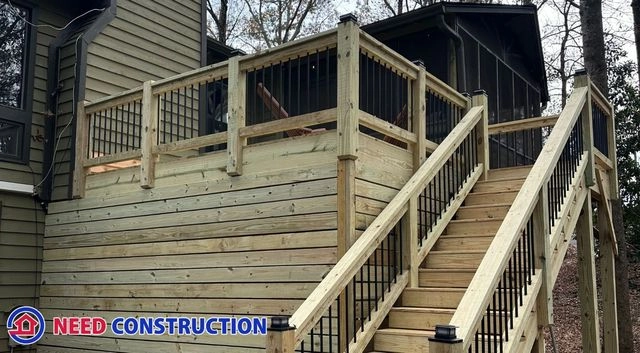
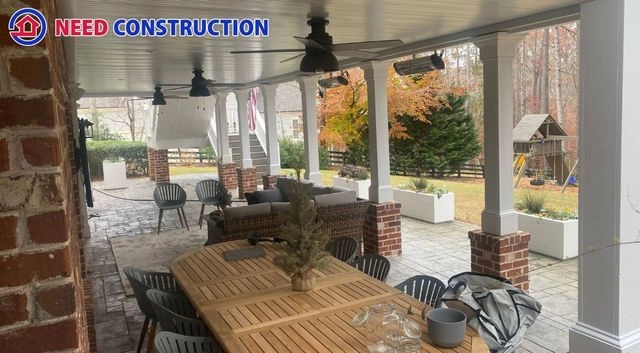
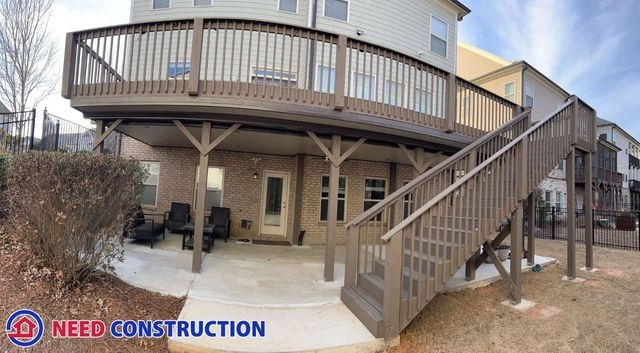
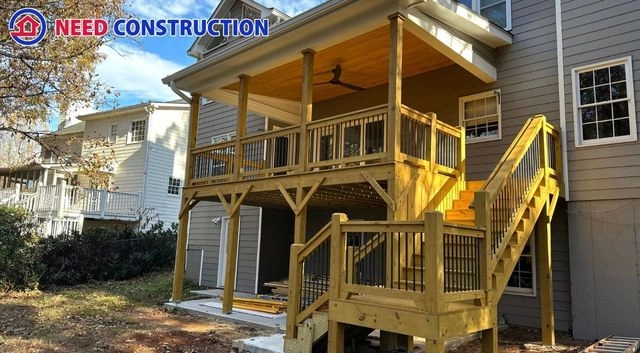
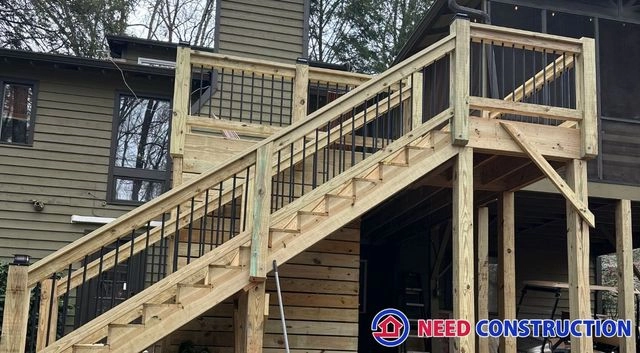
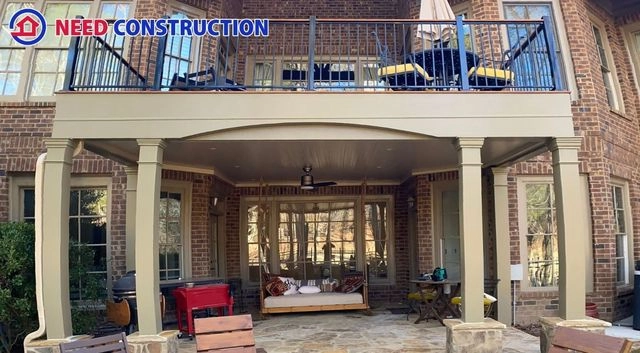
Our Deckorators Deck Projects
Custom Deckorators composite decks built for homeowners across Alpharetta, Milton, Roswell, and North Atlanta.
Frequently Asked Questions About Deckorators Maintenance
Answers to the questions we hear most from composite deck owners in Alpharetta, Milton, Roswell, and across North Atlanta.
Do you need to seal or stain Deckorators decking?
No — sealing or staining is never required with Deckorators composite decking. The boards are manufactured with pre-integrated color and UV stabilizers that resist fading, so there's nothing you need to add after installation. In fact, applying stains, sealants, or paint can damage the surface finish and will void your warranty. We've installed Deckorators decks across Alpharetta and Milton that still look brand new years later with nothing more than soap-and-water cleaning.
What is the best cleaner for Deckorators composite decks?
For routine cleaning, simple dish soap mixed with warm water and a soft-bristle brush is all you need. For tougher buildup — especially the organic film that accumulates during Georgia's pollen season — a specialized composite deck cleaner like Corte Clean or DeckMAX works well without risking surface damage. Avoid bleach-based cleaners and anything containing chlorine, as these can strip pigment from the composite and leave discolored patches. We recommend Corte Clean to most of our North Atlanta clients because it handles mold, mildew, and pollen staining in one application.
Can I use a pressure washer on my Deckorators deck?
Yes, but you need to keep the PSI below 1,500 and use a fan-tip nozzle — never a zero-degree or turbo tip. Hold the wand at least 12 inches from the deck surface and spray in the direction of the board grain. Higher pressure or a concentrated nozzle can scar the surface, creating rough spots that collect dirt faster. Many homeowners in Roswell and Johns Creek find that a garden hose with a spray nozzle handles most cleaning jobs without any pressure washer at all.
How do I remove grease or oil stains from the deck?
Act fast — the sooner you address a grease or oil spill, the easier it comes out. Apply a degreasing dish soap directly to the stain, work it in with a soft nylon brush, and rinse thoroughly with warm water. Don't let oil sit in direct sunlight, as heat can drive it deeper into the composite surface. For stubborn spots that have set in, a composite-safe degreaser from your local hardware store will do the job. We see this most often around grill areas on decks in the Alpharetta and Milton neighborhoods.
Is Deckorators decking scratch-resistant?
Deckorators boards built with Eovations technology have excellent scratch resistance — significantly better than most wood and many competing composites. That said, they're not scratch-proof. Dragging heavy metal furniture, dropping sharp objects, or sliding a heavy planter across the surface can leave marks. We always recommend felt or plastic furniture pads on all deck furniture legs, and lifting rather than dragging when you rearrange. Minor surface scratches often become less visible over time as the boards weather naturally.
How do I deal with Georgia pollen on my deck?
During March and April, North Georgia decks collect a thick yellow-green layer of pollen almost overnight. The key is to remove it before it gets wet and feeds mold growth. Use a leaf blower for dry pollen and debris, then hose down the deck with a garden sprayer once or twice a week during peak season. If pollen has already caked on, a soap-and-water scrub with a soft brush clears it quickly. Our clients in Cumming and Canton — surrounded by pine and hardwood canopy — find this bi-weekly routine keeps their decks clean through spring.
Can I use salt or ice melt on the deck?
You can, but choose your product carefully. Rock salt works but is abrasive and can leave a gritty residue that scratches the surface if walked on. Calcium chloride is the preferred option for composite decking — it's less abrasive and melts ice effectively at lower temperatures. Avoid magnesium chloride, which can leave a slippery film. After the ice melts, rinse the deck thoroughly with a hose to remove any residual chemicals. Georgia doesn't get heavy ice often, but the occasional freeze in Alpharetta and Roswell makes it worth knowing the right approach.
Do I need to worry about rust stains from furniture?
Yes — rust from metal furniture legs is one of the most common staining issues we see on composite decks in North Atlanta. Iron and steel legs that sit in rain or morning dew will leave orange-brown marks that can be tough to remove once they set. Use plastic glides, felt pads, or rubber caps on all metal furniture legs. If a rust stain does develop, an oxalic acid-based cleaner (available at most hardware stores) will typically lift it without damaging the composite surface. Prevention is much easier than removal, so check your furniture legs before each season.
Still have questions?
We're here to help you find the answers.
What Our Deck Clients Say
Real feedback from North Atlanta homeowners who trust Need Construction with their Deckorators deck projects.
"It's tough to find people you feel like you can trust not to try and get over on you. I spoke with Wes about work I needed to get done and was surprised at his level of honesty and professionalism. Putting that with the word of mouth on the quality of his work... and I wouldn't/won't hesitate to work with him on my next project."
MARSHALL NORTHINGTON
2026-03-02
"Wes is awesome! He helped rectify work done by a previous contractor and we would definitely recommend to anyone in the area!"
Austin Campbell
2026-02-01
"Great service ! Outstanding staff and was on time and efficient work was all around beautiful I have referred this company for many other jobs and plan to use them for many more projects"
Brianna Moore
2026-01-17
"We had a major project to be undertaken. Need construction to the rescue!! We had water damage to some of the framing on the home exterior and major deck demo and rebuild. They handled it all. I had some unique requests that I wanted installed on my deck. The DekDrain rain system along with the full composite Dekorators Summit boards and railing with a cocktail rail was our desire. We also had to have a concrete patio area below. Wes and his team made it all happen. The subframe was built with better materials that any other contractor had even offered and I was impressed with that alone. I have no doubt that hurricane force winds would have no effect on this fortress of a deck. Even the city inpectors were wowed by the build quality. The craftsmanship and finishing of the final product is top tier. They will take the time to make sure it's your dream come true."
Rodney Anderson
2026-01-16
"It was great working with Wes and the team at Need Construction. Wes was always in constant communication managing the project and made sure we were happy with the work during every part of the process. Very happy with the quality and workmanship of our new patio, couldn’t ask for much more!"
Lourdes Xavier Alfred Raj
2025-12-04
"Wes and his crew did a great job at a reasonable price rebuilding my shed roof after a tree feel onto it"
Paul Shaffer
2025-12-04
Related Guides for North Atlanta Homeowners
More resources to help you plan, build, and maintain your outdoor living space.
Deck Construction Cost Guide
Real pricing data, material comparisons, and honest budget breakdowns for North Atlanta deck projects.
Read the guide →Under-Deck Drainage Benefits
How under-deck systems protect your investment and create usable dry space beneath your deck.
Read the guide →GAF vs. CertainTeed Shingles
Comparing two of the top roofing brands for Georgia homes — warranty, durability, and installed cost.
Read the guide →Ready for a New Deckorators Deck?
From design consultation to final installation — Need Construction builds composite decks that stand up to Georgia's climate and look great for decades.