4-Season vs. 3-Season Sunroom: Which Addition is Right for Your Georgia Home?
An honest comparison from a North Atlanta contractor who builds both. Learn the real differences in cost, comfort, and year-round usability before you commit to your next home addition.
If you're a homeowner in Alpharetta, Milton, Roswell, or anywhere in the North Atlanta area, adding a sunroom is one of the best ways to expand your living space without the cost and disruption of a full home addition. But the first decision you'll face is a big one: should you build a 3-season room or a 4-season room?
The answer depends on how you plan to use the space, what Georgia's climate will throw at it, and what your budget allows. At Need Construction, we've built both types of sunrooms across North Atlanta for over eight years — from basic screened-in conversions to fully insulated, HVAC-integrated all season room additions. This guide breaks down the real differences so you can make a confident decision.
Whether you're comparing a 4 season vs 3 season sunroom for the first time or trying to figure out if the upgrade to insulated sunroom benefits is worth the extra investment, everything you need is below — straight from the field, not a national database.
The Core Differences: 3-Season vs. 4-Season Rooms
The terms "3-season" and "4-season" describe how well a sunroom performs across the calendar year. The differences come down to materials, construction methods, and how the room ties into your home's systems.
Spring, Summer & Fall Use
- Glass: Single-pane glass or vinyl windows — minimal thermal resistance
- Framing: Lightweight aluminum frames without thermal breaks
- Insulation: Little to no wall or roof insulation
- HVAC: Not connected to your home's heating/cooling system
- Code: Often classified as a "porch enclosure" rather than living space
Year-Round Comfort
- Glass: Double-pane insulated glass with Low-E coatings
- Framing: Thermal-break aluminum or vinyl frames that block heat transfer
- Insulation: Fully insulated walls, ceiling, and knee walls
- HVAC: Connected to home ductwork or dedicated mini-split system
- Code: Built to residential building code — counted as heated living space
Structural Considerations
A 4-season room is built to the same structural standards as any other room in your house. That means engineered footings, load-bearing walls, a properly insulated roof system, and electrical wiring that meets Georgia's residential building code. A 3-season room, by contrast, typically sits on a lighter foundation and uses a post-and-beam structure that doesn't need to support the same loads.
From a visual standpoint, you'll notice the difference in the frame profiles. Three-season frames tend to be thinner and sleeker because they don't need to accommodate thermal breaks or dual-pane glass channels. Four-season frames are slightly thicker, but modern manufacturers have narrowed that gap considerably — most homeowners in Alpharetta and Roswell can't tell the difference from across the room.
The glass coatings are another differentiator. Four-season rooms use Low-E (low emissivity) coatings that reflect infrared heat while letting visible light through. In a Georgia summer, that coating is the difference between a comfortable 74°F room and a greenhouse pushing 100°F by mid-afternoon.
Georgia Climate & Sunroom Performance
Georgia's climate is the single biggest factor in the 4 season vs 3 season sunroom decision. The combination of intense summer heat, high humidity, and occasional winter cold snaps creates conditions that expose the weaknesses of under-insulated rooms quickly.
Summer Heat & Humidity
North Atlanta routinely hits 90–95°F with 70–80% humidity from June through September. In a 3-season room with single-pane glass, that heat radiates straight through — you're essentially sitting in a glass box. Even with ceiling fans running, the room becomes uncomfortable by noon. A 4-season room with Low-E glass and proper insulation stays cool with minimal HVAC effort, blocking up to 70% of solar heat gain.
Winter Cold Snaps
Georgia winters are mild on average, but every year brings a few stretches where overnight lows dip into the 20s. In Milton, Alpharetta, and the northern suburbs, those cold mornings are more common than folks expect. A 3-season room with no insulation and single-pane glass will match outdoor temperatures within an hour of sunset. During a January cold snap, that room becomes a walk-in cooler — not the reading nook you envisioned.
Low-E Glass Performance
Low-E coatings are the unsung hero of a 4-season room in Georgia. These microscopically thin metallic layers reflect infrared radiation (heat) while allowing natural light to pass through. In practice, this means your sunroom stays bright and airy without turning into a sauna. The coating also reflects interior heat back into the room during winter, reducing your HVAC workload in both directions.
Energy Efficiency & Utility Bills
A well-built 4-season room with insulated walls and double-pane Low-E glass typically adds $30–$60 per month to heating and cooling costs — comparable to any other room in your home. A 3-season room that you try to heat with portable units can easily cost twice that while never reaching comfortable temperatures. The insulated sunroom benefits compound year after year, especially as Georgia Power rates continue to climb.
Bottom line: if you plan to use your sunroom more than 8–9 months a year, a 4-season room is the right choice for any home in the North Atlanta metro. The upfront premium pays for itself in usability, comfort, and energy savings within just a few years.
Why North Atlanta Homeowners Trust Need Construction
Licensed, insured, and committed to building additions that last.
Budgeting for Your Sunroom Addition
Real pricing from our projects across Alpharetta, Milton, Roswell, and the greater North Atlanta area.
$20,000 – $40,000
150–250 sq ft typical
- Single-pane glass enclosure
- Aluminum or vinyl framing
- Concrete slab or existing deck base
- Basic electrical (outlets, lighting)
- No HVAC integration
$35,000 – $75,000+
150–300 sq ft typical
- Double-pane insulated Low-E glass
- Thermal-break framing system
- Insulated foundation, walls & roof
- Full electrical with dedicated circuits
- HVAC — mini-split or ductwork extension
What Drives the Price Up
Several factors push a sunroom project toward the higher end of these ranges. Foundation work is the biggest variable — if your lot slopes or doesn't have an existing slab, pouring a new foundation adds $5,000–$15,000. Electrical integration — including dedicated circuits, recessed lighting, and code-compliant outlets — typically runs $2,000–$5,000. And if you're building a 4-season room, HVAC tie-in or a new mini-split system adds another $3,000–$6,000.
ROI: How a 4-Season Room Adds Real Value
Here's where the 4-season room pulls ahead in the long run. Because it meets building code as conditioned living space, it adds true heated square footage to your home's appraisal. In the North Atlanta market, that square footage is valued at $150–$250+ per square foot at resale. A 200 sq ft 4-season room that cost $55,000 to build could add $30,000–$50,000 in appraised value — a strong return compared to a 3-season room, which appraisers typically value as a "porch" rather than living space.
Financing Options
Need Construction partners with trusted third-party lenders to offer flexible financing for qualified homeowners. Most clients choose 12–60 month terms with competitive rates. For larger home addition projects, home equity lines of credit (HELOCs) are another popular option — your bank may offer favorable terms since the addition increases your property value. We discuss all options during your design consultation so you can make the choice that fits your budget. For more on planning a major addition project, see our home addition planning checklist.
Ready to Design Your Sunroom?
Get a detailed, itemized estimate for your 3-season or 4-season sunroom — based on your property, your goals, and real North Atlanta pricing.
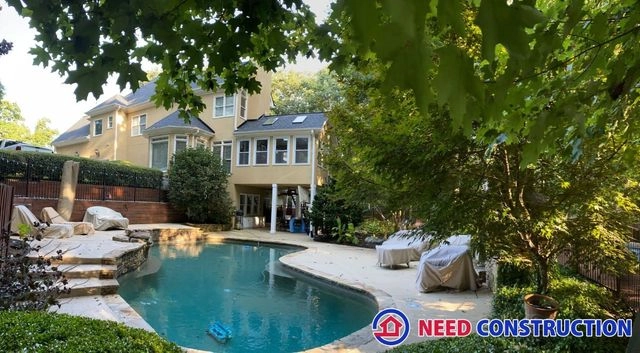
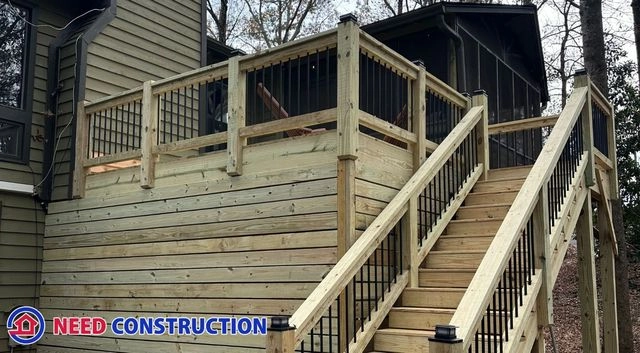
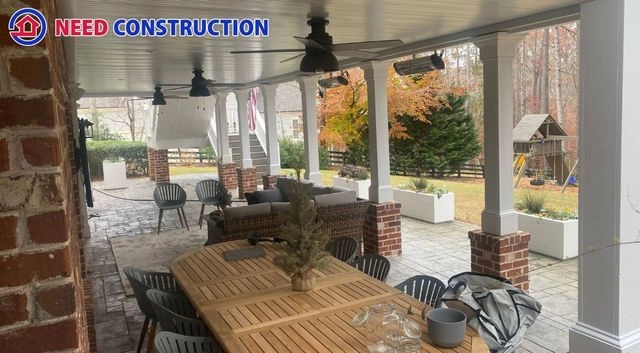
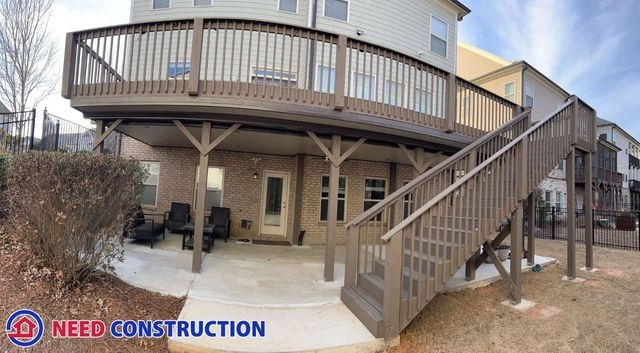
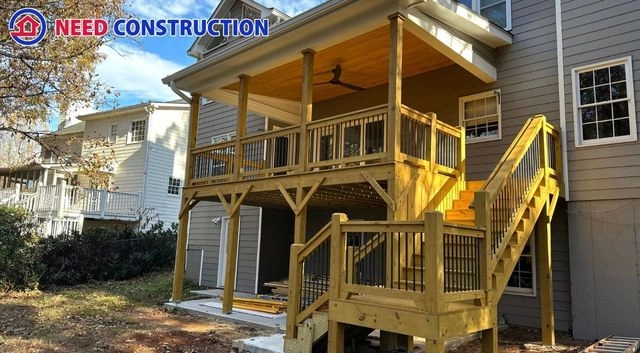
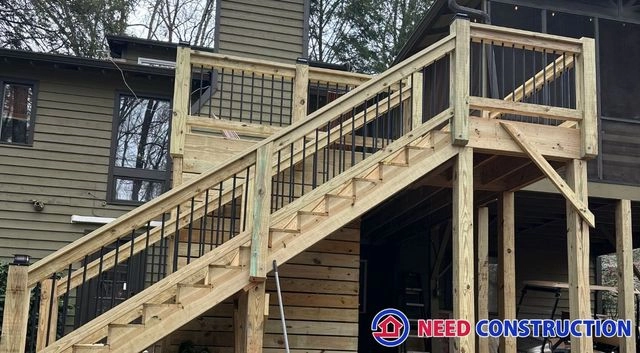
Our Sunroom & Addition Projects
Recent home additions built for North Atlanta families — from sunrooms and screened porches to full room additions.
Sunroom FAQs for North Atlanta Homeowners
Answers to the questions we hear most from homeowners in Alpharetta, Milton, Roswell, and across the North Atlanta metro.
Can you use a 3-season room in the winter in Georgia?
You can sit in a 3-season room during milder Georgia winter days, but it won't be comfortable once temperatures drop below 40°F. Single-pane glass and uninsulated walls lose heat rapidly, so a portable space heater will struggle to keep up — and your electric bill will spike. Most of our clients in Alpharetta and Milton find their 3-season rooms sit unused from late November through February. If you want year-round use, a 4-season sunroom with proper insulation is the better investment.
Is a 4-season room considered taxable living space?
Yes. In Fulton and Forsyth counties, a 4-season room with permanent heating and cooling is classified as conditioned living space, which means it adds to your home's total heated square footage. It must meet all local residential building codes — insulation values, egress, electrical, and structural. While your property taxes will increase, so does your home's appraised value. Most homeowners we work with see the added equity far outweigh the modest tax bump.
How much more expensive is a 4-season room vs 3-season?
Expect a 4-season sunroom to cost roughly 30–50% more than a comparable 3-season room. The premium goes toward double-pane insulated glass, thermal-break aluminum frames, insulated roofing, and HVAC integration — all of which make the space livable 365 days a year. For a typical 200 sq ft addition in North Atlanta, that translates to an additional $15,000–$30,000. However, the 4-season room adds genuine square footage to your home's appraisal, delivering a stronger return at resale.
Do I need a permit for a sunroom in Alpharetta, GA?
Yes — any structural addition to your home in Alpharetta requires a building permit from the City of Alpharetta Community Development department. This applies to both 3-season and 4-season sunrooms. The permitting process includes plan review, foundation inspection, framing inspection, and a final sign-off. Need Construction handles the full permitting process for every project we build, so you don't have to navigate the paperwork yourself.
What is the difference between a sunroom and a screened porch?
A screened porch uses mesh screens that allow airflow but block insects — you're still exposed to outdoor temperatures, humidity, and pollen. A sunroom uses glass panels to create a fully enclosed, weather-tight space that keeps out pollen, rain, and bugs. For Georgia homeowners who deal with heavy spring pollen seasons and summer humidity, a sunroom offers significantly more usability than a screened porch. The trade-off is higher cost, but the comfort and added home value make it worthwhile for most families.
How long does it take to build a 4-season sunroom?
A typical 4-season sunroom project in North Atlanta takes 6–10 weeks from permit approval to completion. Foundation work — footings, slab, or pier system — accounts for the first 1–2 weeks. The framing, roofing, and glass installation follow over the next 3–4 weeks. Custom glass fabrication can add lead time if specialty Low-E or tinted panels are specified. We recommend starting the design process 8–12 weeks before your target move-in date to account for permitting and material lead times.
Can I convert an existing deck into a 4-season room?
Yes, deck-to-sunroom conversions are one of the most common projects we handle across Roswell, Milton, and Johns Creek. However, most existing decks weren't designed to carry the weight of insulated walls, a solid roof, and glass panels, so a structural inspection of the footings and framing is the critical first step. Many decks need reinforced footings and upgraded beams to support the added load. A licensed structural engineer evaluates the existing structure, and we handle all necessary upgrades during the build.
Does a 4-season room need its own HVAC system?
It depends on your home's existing HVAC capacity. The most popular option we install is a ductless mini-split system, which gives your sunroom independent temperature control without overloading your main unit. Mini-splits are energy efficient, quiet, and relatively affordable to install — typically $3,000–$5,500. In some cases, we can extend your existing ductwork into the new room, but this only works if your current system has the tonnage to handle the extra square footage.
Still have questions?
We're here to help you find the answers.
What Our Clients Say About Their Additions
Real feedback from North Atlanta homeowners who trusted Need Construction with their sunroom and home addition projects.
"It's tough to find people you feel like you can trust not to try and get over on you. I spoke with Wes about work I needed to get done and was surprised at his level of honesty and professionalism. Putting that with the word of mouth on the quality of his work... and I wouldn't/won't hesitate to work with him on my next project."
MARSHALL NORTHINGTON
2026-03-02
"Wes is awesome! He helped rectify work done by a previous contractor and we would definitely recommend to anyone in the area!"
Austin Campbell
2026-02-01
"Great service ! Outstanding staff and was on time and efficient work was all around beautiful I have referred this company for many other jobs and plan to use them for many more projects"
Brianna Moore
2026-01-17
"We had a major project to be undertaken. Need construction to the rescue!! We had water damage to some of the framing on the home exterior and major deck demo and rebuild. They handled it all. I had some unique requests that I wanted installed on my deck. The DekDrain rain system along with the full composite Dekorators Summit boards and railing with a cocktail rail was our desire. We also had to have a concrete patio area below. Wes and his team made it all happen. The subframe was built with better materials that any other contractor had even offered and I was impressed with that alone. I have no doubt that hurricane force winds would have no effect on this fortress of a deck. Even the city inpectors were wowed by the build quality. The craftsmanship and finishing of the final product is top tier. They will take the time to make sure it's your dream come true."
Rodney Anderson
2026-01-16
"It was great working with Wes and the team at Need Construction. Wes was always in constant communication managing the project and made sure we were happy with the work during every part of the process. Very happy with the quality and workmanship of our new patio, couldn’t ask for much more!"
Lourdes Xavier Alfred Raj
2025-12-04
"Wes and his crew did a great job at a reasonable price rebuilding my shed roof after a tree feel onto it"
Paul Shaffer
2025-12-04
Related Home Improvement Guides
More resources to help you plan your next home improvement project in North Atlanta.
Deck Construction Cost Guide
Real pricing data and material comparisons for building a deck in the North Atlanta market.
Read the guide →GAF vs. CertainTeed Shingles
A side-by-side comparison of two leading roofing brands for Georgia homeowners.
Read the guide →Underdeck Drainage Benefits
How underdeck systems create usable outdoor space beneath elevated decks and porches.
Read the guide →Serving Alpharetta, Milton, Roswell & Surrounding Communities
Conveniently located for North Atlanta customers
Hours
Monday - Friday: 9am - 6pm
Saturday: 9am - 5pm
Sunday: Closed
Let's Plan Your Sunroom Addition
From a quick comparison to a full design consultation — we'll help you choose the right sunroom for your home, your lifestyle, and your budget.